Classrooms
Starfish Classroom (10 weeks through 18 months)
Teachers Carol and Sandra provide care that is inspired by the RIE approach, developed by Magda Gerber, one of the pioneers of Infant and Toddler “educaring.” Our infants are treated with respect and recognized as capable, competent learners from birth. Teachers build trusting relationships by responding to each child's cues, communicating with the children during caregiving routines, and involving them as active participants in daily experiences such as diapering, feeding, and dressing. These routines are viewed as valuable opportunities for connection rather than tasks to be completed quickly.
The classroom environment is calm, predictable, and thoughtfully prepared with simple, open-ended materials that encourage exploration without overstimulation. Infants are given uninterrupted time to move freely, investigate their surroundings, and engage in self-directed play at their own pace. Rather than placing infants in equipment that restricts movement or directing their play, the teachers observe carefully, provide encouragement, and step in only when support is needed.
Otter Classroom (18 months through 30 months)
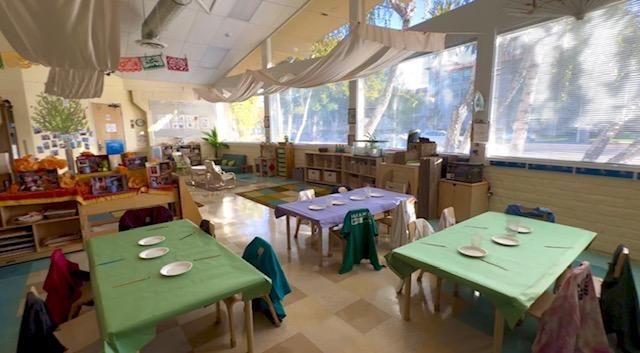
Teachers Sobha and Fatemeh provide a welcoming and engaging environment that recognizes toddlers as capable, curious, and active participants in their own learning. The Otter room emphasizes child-led interactions, strong relationships, and meaningful documentation of learning.The classroom is thoughtfully organized with natural materials, open-ended resources, and inviting learning areas that encourage exploration, creativity, and collaboration.
The teachers carefully observe children's interests and use these observations to develop emergent curriculum experiences that are meaningful and relevant to the group. Rather than following a predetermined set of activities, learning evolves through the children's questions, discoveries, and play. Materials are intentionally displayed at children's level, inviting them to make choices, investigate, and express their ideas in a variety of ways.
Turtle Classroom (young 2’s and early 3’s)
Teachers Alexa and Cecilia provide open-ended materials such as blocks, loose parts, art supplies, sensory materials and items from nature that invite children to investigate, create, and problem-solve through play.
Learning is driven by the children's interests and questions through an emergent curriculum. The teachers observe children's play, conversations, and discoveries, then use these observations to plan experiences that extend their thinking and support development across all learning domains. The environment contains thoughtfully arranged areas for dramatic play, art, sensory exploration, construction, books, music, and outdoor learning. Children's artwork, photographs, and representations of culture are displayed throughout the classroom, celebrating their ideas, backgrounds, and making their thinking visible.
Sharks Classroom (older 3’s through 5’s)
Teachers Ariel, Lina, and Irene work with a mixed-age classroom of three- to five-year-olds The classroom and curriculum are inspired by the Reggio Emilia approach, which provides a vibrant learning community where children are viewed as capable, competent, and full of potential. The classroom fosters collaboration, curiosity, and respect, allowing younger and older children to learn alongside one another through shared experiences. Older children naturally model skills, language, and problem-solving strategies, while younger children contribute fresh perspectives and unique ideas, creating a rich environment for peer learning.
The classroom environment is intentionally designed to serve as the "third teacher." Thoughtfully arranged learning areas feature natural materials, open-ended resources, and inviting spaces for art, construction, dramatic play, literacy, science, sensory exploration, and quiet reflection. Materials are organized and accessible, encouraging children to make independent choices, revisit their ideas, and engage in sustained investigations.
Daily routines provide a balance of consistency and flexibility, with ample time for uninterrupted play, small-group investigations, outdoor exploration, meals, rest, and routines that support children's growing independence. Teachers build strong, respectful relationships with each child and family, creating a classroom community where every child feels safe, valued, and encouraged to develop confidence, curiosity, and a lifelong love of learning.